
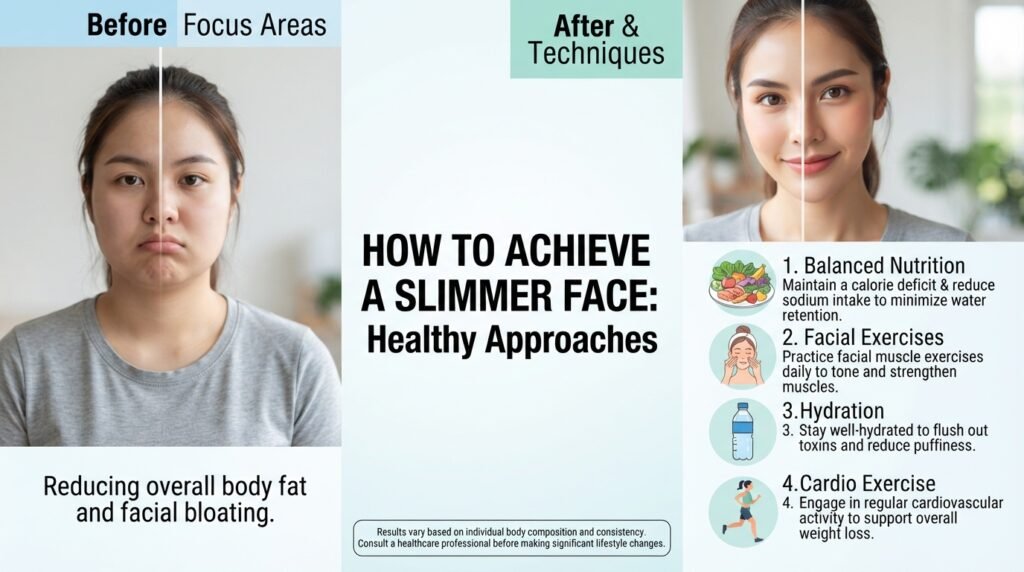

Wondering how to lose weight on your face? A fuller face can sometimes make you feel heavier than you actually are, especially when excess body fat, water retention, poor sleep, or a high-sodium diet contributes to facial puffiness. The good news is that you can take practical steps to create a healthier, more defined appearance.
However, there is one important fact to understand: you cannot reliably choose exactly where your body loses fat. Facial fat generally decreases as overall body fat decreases. Instead of relying on extreme diets or questionable “face slimming” tricks, focus on sustainable nutrition, regular physical activity, good sleep, hydration, and healthy lifestyle habits.
This guide explains how to lose weight on your face naturally, what causes facial fullness, which habits may help reduce puffiness, and what realistic results you can expect.
Quick takeaway: You cannot directly target facial fat, but reducing overall body fat and managing factors such as water retention can make the face appear slimmer and more defined.
What Causes a Face to Look Fuller?
Before learning how to lose weight on your face, it helps to understand why your face may appear rounder or puffier. Genetics play a major role in facial structure and where your body naturally stores fat. Some people naturally have softer cheeks or a rounder face even when they are at a healthy weight.
Body composition is another factor. When you gain body fat, some of it may be stored around the cheeks, jawline, and neck. Losing weight gradually may reduce this fullness, although the amount and speed of facial change differ from person to person.
Facial appearance can also change because of temporary water retention. Eating a lot of salty foods, drinking alcohol, sleeping poorly, experiencing hormonal fluctuations, or becoming dehydrated can sometimes make the face look puffy.
Common Factors That Affect Facial Appearance
| Factor | Possible effect on the face | Helpful approach |
|---|---|---|
| Overall body fat | May increase cheek or facial fullness | Gradual, sustainable fat loss |
| High sodium intake | Can contribute to water retention | Choose more minimally processed foods |
| Poor sleep | May contribute to tired or puffy appearance | Aim for consistent, adequate sleep |
| Dehydration | Can affect fluid balance | Drink fluids regularly |
| Alcohol | May contribute to dehydration and puffiness | Limit intake |
| Genetics | Influences natural face shape | Focus on overall health rather than changing genetics |
| Aging | Can alter fat distribution and skin elasticity | Healthy lifestyle and sun protection |
Understanding these factors is important because how to lose weight on your face is not simply about doing facial exercises. Your overall lifestyle has a much greater influence on long-term changes.
Can You Lose Fat Only From Your Face?
One of the biggest misconceptions about facial slimming is the idea of spot reduction. You may see exercises advertised as a way to burn fat specifically from your cheeks or jawline, but fat loss generally does not work that way.
When your body uses stored fat for energy, you cannot precisely control which area loses it first. Genetics, hormones, sex, age, and overall body composition can influence your individual pattern of fat loss.
If you are carrying excess body fat, gradually losing weight through a balanced eating pattern and regular exercise may eventually make your face look leaner. Some people notice facial changes relatively early, while others see greater changes in other areas before their face becomes noticeably slimmer.
This is why the best answer to how to lose weight on your face usually involves improving overall health rather than trying to force fat loss from one particular area.
Focus on Sustainable Weight Loss
If excess body fat contributes to a fuller face, creating a modest calorie deficit may help reduce fat over time. A calorie deficit occurs when you consume less energy than your body uses, causing your body to draw on stored energy.
The goal should not be to eat as little as possible. Crash diets can be difficult to maintain and may leave you feeling tired, hungry, and frustrated. A more sustainable approach includes nutritious foods that keep you satisfied while supporting your daily energy needs.
Try building meals around vegetables, fruit, whole grains, lean proteins, beans, nuts, seeds, and other minimally processed foods. You do not have to eliminate carbohydrates or completely avoid your favorite foods to make progress.
Healthy weight loss is a long-term process, not a race. Consistency usually matters more than extreme restrictions.
If you are already at a healthy weight, intentionally losing more weight simply to change your face may not be appropriate. Facial shape is partly determined by genetics and bone structure, so a naturally round face is not necessarily a sign of excess weight.
Choose Foods That Support a Healthy Body
Nutrition is one of the most important parts of understanding how to lose weight on your face. Instead of searching for one magical food that melts facial fat, create an eating pattern that supports healthy body composition.
Protein-rich foods can be particularly useful because protein helps support muscle tissue and can increase feelings of fullness. Good options include eggs, fish, poultry, Greek yogurt, beans, lentils, tofu, and other protein-rich foods.
Fiber-rich foods can also help you stay satisfied. Vegetables, fruits, whole grains, beans, and legumes can add volume and nutrients to meals without relying heavily on highly processed foods.
It can also be useful to pay attention to foods that are high in sodium and heavily processed. While sodium is an essential nutrient, consuming large amounts can contribute to fluid retention in some people, potentially making facial puffiness more noticeable.
Stay Hydrated Throughout the Day
Hydration is another useful consideration when exploring how to lose weight on your face. Your body needs water for many normal functions, and drinking enough fluids supports overall health.
Some people mistakenly reduce their water intake because they think it will make them look less puffy. In reality, regularly drinking an appropriate amount of water is generally a better strategy than deliberately becoming dehydrated.
Your fluid needs can vary based on climate, activity level, diet, body size, and other factors. Water is an excellent everyday choice, although fluids also come from foods and other beverages.
If you frequently consume sugary drinks, replacing some of them with water or unsweetened beverages can also reduce your overall calorie intake. That can support gradual weight management without requiring extreme dietary changes.
Reduce Excess Sodium and Highly Processed Foods
If your concern is facial puffiness rather than actual facial fat, sodium intake may deserve attention. Salty meals can cause temporary water retention, which may make some people look puffier.
Processed foods such as packaged snacks, instant meals, processed meats, and some fast foods can contain significant amounts of sodium. You do not need to eliminate them completely, but eating them less frequently and choosing more whole foods can make your overall diet more balanced.
Cooking at home can make it easier to control how much salt goes into your meals. Try flavoring food with herbs, spices, garlic, ginger, lemon, or other seasonings instead of relying heavily on salt.
Remember that facial puffiness has many possible causes. If swelling is persistent, severe, sudden, or accompanied by other symptoms, it is better to speak with a qualified healthcare professional rather than assuming that sodium is responsible.
Get Enough Quality Sleep
Sleep is often overlooked when people search for how to lose weight on your face, but it plays an important role in overall health and weight management.
Consistently poor sleep can affect appetite, energy, mood, and daily food choices. When you are exhausted, it may become harder to stay active or choose nutritious meals.
Sleep can also affect how your face looks in the short term. After a poor night’s sleep, you may notice that your face looks tired, swollen, or less defined.
Try maintaining a consistent sleep schedule, creating a relaxing bedtime routine, limiting unnecessary screen use before bed, and keeping your sleeping environment comfortable. Good sleep will not specifically burn cheek fat, but it can support the broader lifestyle habits that make healthy weight management easier.
Exercise Regularly for Overall Fat Loss
Regular physical activity is an important part of learning how to lose weight on your face because it can support overall calorie expenditure and body composition.
Cardio activities such as brisk walking, cycling, swimming, dancing, jogging, or similar exercises can increase energy expenditure. You do not necessarily need intense workouts to make a difference. Choosing activities you can perform consistently is often more useful than forcing yourself through workouts you dislike.
Strength training is valuable too. Resistance exercises can help build and maintain muscle, which supports a healthy body composition. A balanced routine can include both aerobic activity and strength-based exercise.
Facial exercises may strengthen or move facial muscles, but they should not be viewed as a proven method for selectively burning facial fat. Your best results are likely to come from improving overall fitness and maintaining a healthy body weight.
Try Simple Habits to Reduce Facial Puffiness
Sometimes the issue is not facial fat at all. Temporary puffiness can make your cheeks, eyelids, and jaw area appear fuller than usual.
If you wake up with a puffy face, consider your sleep, hydration, alcohol intake, recent salty meals, and general routine. Getting adequate rest and staying hydrated may help your appearance return to normal.
Gentle facial massage is sometimes used as a temporary way to promote relaxation or reduce the feeling of puffiness, but it should not be confused with fat loss. It cannot permanently remove stored fat from your cheeks.
The key distinction is simple: fat loss changes body composition over time, while reducing temporary puffiness can change appearance more quickly but temporarily.
Avoid Extreme Face-Slimming Methods
Searching online for how to lose weight on your face can lead you toward unrealistic promises. Be cautious about products, diets, or techniques that claim to melt cheek fat overnight.
Extreme fasting, dehydration, unregulated supplements, and severe calorie restriction can be harmful and are generally unnecessary for achieving sustainable results. Losing weight too quickly may also make it harder to maintain your progress.
You should also be skeptical of before-and-after photographs. Lighting, camera angles, facial expressions, makeup, filters, and dehydration can dramatically change someone’s appearance.
A healthy approach should make you feel stronger and more energetic rather than constantly hungry, weak, or obsessed with your appearance.
Facial Exercises: Do They Really Work?
Facial exercises are often promoted as an easy solution for getting a slimmer face. These exercises may involve smiling, puffing out the cheeks, moving the jaw, or repeatedly contracting facial muscles.
Although facial exercises can engage muscles, there is limited evidence that they can specifically burn enough facial fat to produce meaningful fat loss. Fat is not selectively burned simply because a particular muscle is being exercised.
That does not mean facial exercises are necessarily useless. Some people may enjoy them as part of a relaxation or facial-movement routine. However, they should not replace a healthy diet, physical activity, sleep, and other established approaches to weight management.
If you want a more defined face, focus first on factors that can actually influence overall body composition.
How Long Does It Take to See Facial Changes?
There is no universal timeline for facial weight loss. Your results depend on your starting body composition, genetics, age, diet, activity level, sleep, and the amount of weight you lose overall.
Some people notice changes in their face after losing a relatively small amount of weight, while others may see changes later. Your body decides where fat comes off first, so you cannot guarantee that your face will be the first place to change.
This is another reason to avoid obsessively checking your face every day. Take a longer-term view and focus on behaviors you can control.
If your weight is changing at a gradual and healthy pace, give your body time to adapt. Sustainable progress is more valuable than rapid changes that are difficult to maintain.
Related Keywords to Know
For stronger SEO coverage, this topic naturally connects with several related search terms. These include lose face fat naturally, how to reduce face fat, slim face naturally, reduce cheek fat, how to get a slimmer face, facial puffiness, face slimming tips, healthy weight loss, reduce facial bloating, jawline definition, and overall body fat loss.
These phrases describe slightly different concerns. Someone searching for ways to reduce cheek fat may be talking about body fat, while another person searching for facial puffiness may actually be concerned about temporary fluid retention.
Understanding this distinction helps you choose an appropriate strategy rather than treating every facial change as a weight problem.
When Should You Talk to a Healthcare Professional?
A fuller face is not automatically a health concern. Facial structure varies naturally, and people can have round, square, oval, heart-shaped, or other face shapes at many different body weights.
However, unexplained facial swelling can sometimes be associated with an underlying health issue, medication, allergy, infection, or other condition. Sudden swelling, particularly if it affects breathing or is accompanied by serious symptoms, requires prompt medical attention.
If you are unsure whether losing weight is appropriate for you, particularly if you already have a healthy weight, consider speaking with a doctor or registered dietitian. They can help you understand your individual nutritional and health needs.
The safest approach to how to lose weight on your face is one that supports your entire body rather than focusing exclusively on appearance.
Conclusion
Learning how to lose weight on your face starts with understanding that targeted fat loss is not something you can reliably control. If excess body fat is contributing to facial fullness, gradual overall weight loss may eventually make your face look slimmer.
A balanced diet, regular physical activity, adequate hydration, quality sleep, and sensible portions are much more useful than crash diets or supposed overnight face-slimming solutions. If puffiness is the main issue, paying attention to sodium, alcohol, hydration, and sleep may also help.
Most importantly, remember that facial shape is strongly influenced by genetics and natural anatomy. A round or full face is not automatically unhealthy. Focus on sustainable habits, realistic expectations, and overall well-being rather than chasing a particular facial shape.
Frequently Asked Questions
Can you lose weight only from your face?
No, you generally cannot control exactly where your body loses fat. When you lose overall body fat, your face may become slimmer depending on your genetics and individual fat distribution. This is why how to lose weight on your face is best approached through healthy overall weight management rather than targeted fat-burning techniques.
How can I reduce face fat naturally?
To reduce facial fat naturally, focus on sustainable habits such as eating a balanced diet, staying physically active, getting enough sleep, and maintaining an appropriate calorie intake. If excess body fat is present, gradual overall fat loss may eventually reduce facial fullness.
Does drinking water help make your face slimmer?
Staying hydrated supports normal body functions and may help with fluid balance. If facial puffiness is partly related to dehydration or lifestyle factors, adequate hydration may improve your appearance. However, water itself does not selectively burn facial fat.
Can facial exercises remove cheek fat?
Facial exercises can activate facial muscles, but they cannot reliably target fat loss specifically from the cheeks. If you want to understand how to lose weight on your face, it is more useful to focus on overall body composition, nutrition, physical activity, sleep, and other sustainable habits.
How quickly can I lose face fat?
There is no fixed timeline because everyone stores and loses fat differently. Some people notice changes in their face relatively early during overall weight loss, while others see changes later. Avoid extreme methods and allow your body to change gradually.
Does reducing salt reduce facial puffiness?
Reducing excessive sodium intake may help some people who experience water retention. However, facial puffiness has multiple possible causes, including sleep, hydration, alcohol, allergies, medications, and health conditions. Persistent or unexplained swelling should be discussed with a healthcare professional.
What is the best exercise for a slimmer face?
There is no single exercise that specifically burns facial fat. Activities such as brisk walking, cycling, swimming, running, and strength training can support overall fitness and healthy weight management. A consistent exercise routine is more useful than relying on facial exercises alone.
Can sleeping better help reduce facial puffiness?
Yes, getting adequate and consistent sleep may help your face look less tired or puffy, especially if poor sleep is contributing to your appearance. Sleep also supports appetite regulation, energy levels, and healthy lifestyle habits that can contribute to long-term weight management.